
The ocean, vast and largely unexplored, is a realm of mystery where the known and unknown coexist. Among its many enigmas is the phenomenon of Unidentified Submerged Objects (USOs). Like their aerial counterparts, UFOs, USOs stir the imagination and invite a myriad of theories and speculations. This article delves into historical accounts and contemporary reports of USOs, exploring the tantalizing possibility of extraterrestrial activity beneath the waves.
The Historical Roots of Underwater Mysteries
The notion of unusual objects in the water dates back centuries, long before the acronym USO came into use. One of the earliest known accounts comes from Christopher Columbus during his 1492 voyage across the Atlantic Ocean. Columbus reportedly noted in his journal strange lights in the sea near Bermuda, described as "a candle light going up and down" in the distant horizon. Some theorists propose these might have been early USO sightings, though others argue they were natural phenomena, like bioluminescent marine life.
In ancient texts, there are references to strange objects engaging with seas and oceans. The Vikings, known for their sea exploration, spoke of sea creatures and entities that could easily be imagined as alien or advanced technology when viewed through a modern lens. Whether these accounts are myths or records of unexplained phenomena remains a topic of debate among historians and ufologists alike.

Key Modern USO Incidents
The Baltic Sea Anomaly
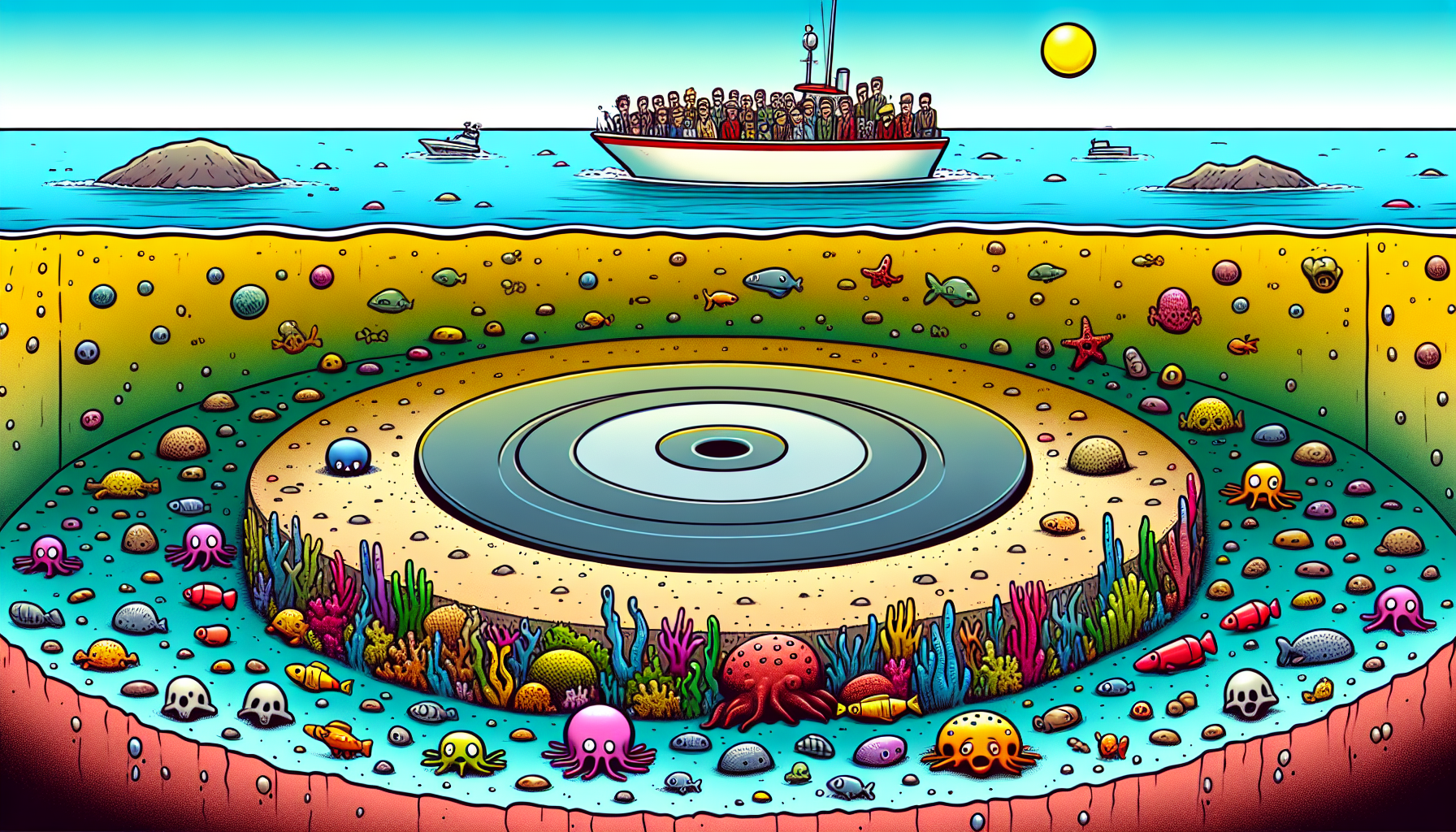
In 2011, a group of Swedish ocean explorers named Ocean X made headlines when they happened upon a bizarre structure 92 meters below the surface of the Baltic Sea. The object, spanning approximately 60 meters in diameter, resembled a flying saucer, complete with what appeared to be runway-like tracks behind it. While geologists argued it could be a natural formation, the team leader, Peter Lindberg, noted the object's metallic semblance was unlike anything they had seen before. This discovery continues to captivate audiences and fuel speculation about its origins.
The Shag Harbour Incident
On the night of October 4, 1967, residents of Shag Harbour, Nova Scotia, witnessed a lit object fall into the water, triggering one of Canada's most fascinating UFO investigations. Eyewitnesses, including RCMP officers, reported seeing an object crash into the harbor. Investigations by the Canadian government were inconclusive, and rumors of a USO origin added layers to the narrative. Diver reports later suggested the possibility of an underwater vehicle or entity, further engaging interest in underwater UFO phenomena.
USS Princeton and the Tic-Tac Encounter
In November 2004, the crew of the USS Princeton, operating as part of a naval exercise off the coast of California, detected anomalous radar signals over several weeks. These signals led to the famous "Tic-Tac" UFO encounter, where advanced craft displayed unexplained flight characteristics. What is less known is the accompanying reports of unidentified objects moving rapidly underwater at speeds unclad submarines can manage. This raised questions about whether these could be USOs, a possibility that both validated and puzzled military analysts.
Scientific, Cultural, and Military Interest
Unlike aerial UFO sightings that garner significant media attention, USOs operate in the shadowy depths, making direct observation and documentation challenging. The scientific community often debates these phenomena, at times attributing sightings to natural oceanic events, mirages, or human-made objects like submarines or experimental crafts. Yet, the sheer volume of credible witnesses, including military personnel, has prompted some scientists to entertain more speculative hypotheses.
Culturally, USOs have inspired a wealth of literature and media, from H.P. Lovecraft’s tales of sunken worlds to modern cinematic interpretations like "The Abyss," which posit advanced civilizations beneath our oceans. These narratives expand upon the fears and fascinations with what lies hidden below.
The military's interest in unexplained underwater phenomena is more pragmatic, often tied to national security concerns. There is speculation that some governments may indeed have encountered technologies far beyond current human capabilities, which could explain the confidentiality surrounding some of these reports. The potential of advanced technology, either salvaged from unidentified submerged crafts or developed in response to them, remains a topic of high interest among defense sectors.
The Deep Ocean – A Final Frontier?
Despite advancements in oceanography and technology, the ocean remains one of the least explored realms on Earth, with over 80% remaining unmapped and unobserved. This vast, obscured frontier is ripe for mysteries, whether stemming from human imagination or extraterrestrial visitors. The existence of deep-sea trenches and uncharted territories allows USO theories to persist amid possibilities of hidden bases or advanced underwater vehicles.
Frequent accounts of USOs encourage the continued curiosity and investment in technology capable of observing these encounters more comprehensively. The intersection of USOs with UFOs suggests a multi-dimensional approach to understanding phenomena poised at the boundary of our knowledge.

In conclusion, while definitive proof of USOs as extraterrestrial craft remains elusive, the compelling narratives and documented encounters ensure the phenomenon's place in both scientific inquiry and popular culture. As technology progresses and humanity continues to push towards further exploration of both space and sea, the mysteries of USOs persist, waiting like deep-sea treasures to be uncovered.