Why Don't Aliens Show Themselves? Theories on Extraterrestrial Secrecy
The question of why extraterrestrial beings have yet to reveal themselves to humanity has puzzled scientists, ufologists, and conspiracy theorists alike for decades. With countless reported UFO sightings and anecdotal evidence, one might expect a more direct interaction by now. Yet, the mystery persists, invoking a plethora of theories that seek to explain the apparent secrecy of extraterrestrial life.
The Fermi Paradox: A Starting Point
Proposed by physicist Enrico Fermi in 1950, the Fermi Paradox raises a fundamental question: With billions of stars in our galaxy, many of which have potentially habitable planets, why haven't we encountered any signs of intelligent life? This dilemma forms the backbone for much of the speculation surrounding alien secrecy.
Hypotheses on Extraterrestrial Secrecy
There are numerous hypotheses about why aliens have not made themselves known, each with its own unique perspective.
The Zoo Hypothesis
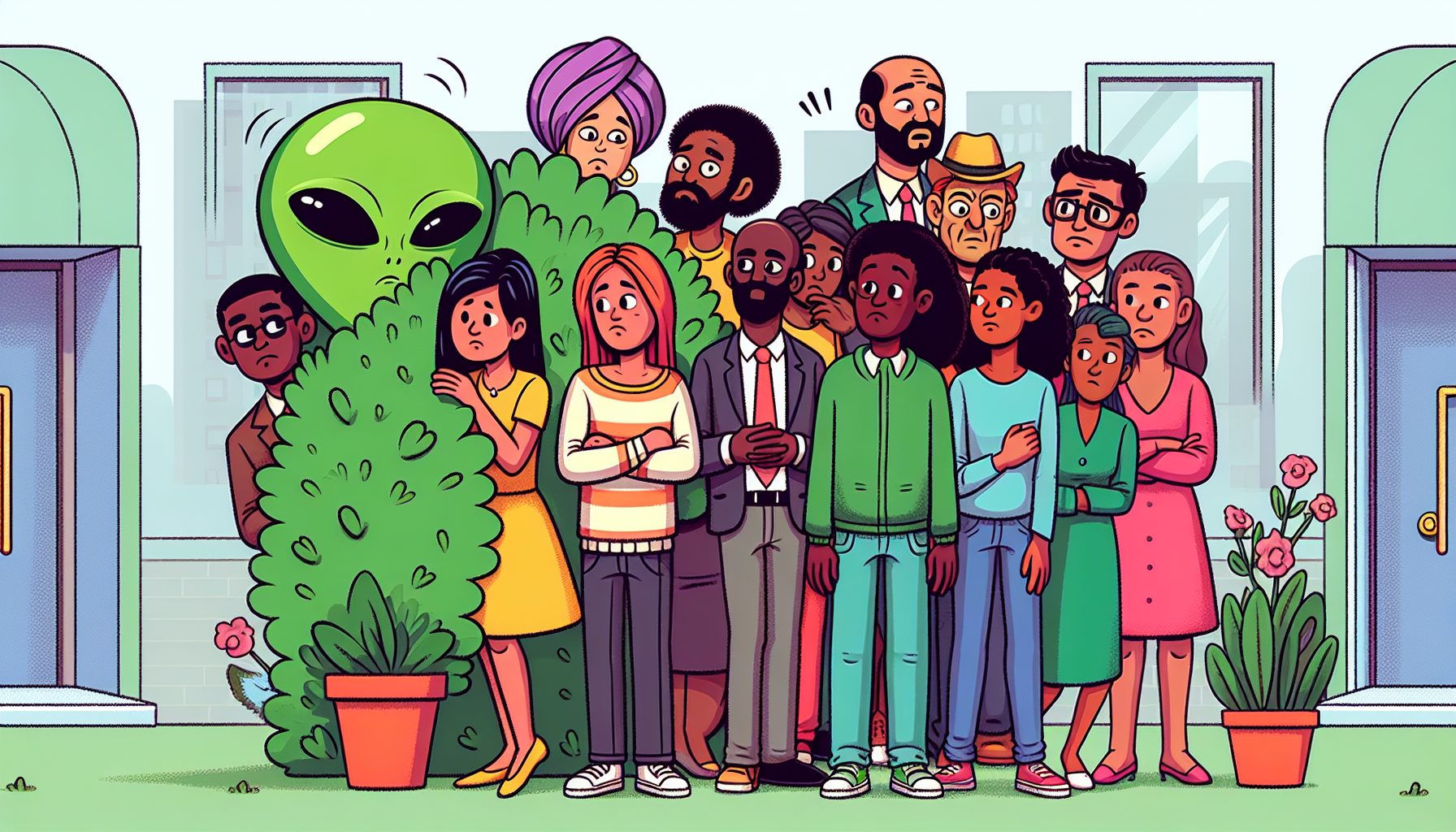
Proposed by astronomer John A. Ball in 1973, the Zoo Hypothesis suggests that extraterrestrial civilizations purposely avoid contact with us to allow for natural evolution and sociocultural development, similar to zookeepers ensuring that animals have no awareness of being observed. According to Ball, the aliens could be technologically superior and might destabilize our societal progress.
<
The Prime Directive Theory
This hypothesis, inspired by the science fiction series "Star Trek", posits that aliens adhere to a non-interference policy. If Earth is being monitored by extraterrestrial supervisors, they might choose not to intervene in order to allow species to reach a certain level of maturity or technological advancement before initiating contact.
The Simulation Argument
Philosopher Nick Bostrom's Simulation Hypothesis adds another layer to the mystery. If we are living in a simulated reality controlled by advanced beings or civilizations, our creators may not wish to reveal any definitive signs of their existence as it might disrupt the intended experience of the simulation.
Resource Management and Energy Conservation
Another theory suggests that aliens might choose not to engage with us due to resource conservation concerns. It requires significant energy and resources to travel across vast interstellar distances, and engaging with a potentially volatile species like humans might not outweigh the benefits for extraterrestrial entities focused on efficiency.
<
The Risk of Cultural Contamination
Reported by SETI astronomer Seth Shostak, the risk of cultural contamination is also significant. If a highly advanced alien race interacted with humans, it could radically alter global cultures and societal structures, posing a threat to the diversity of civilizations throughout the galaxy.
Historical Context and Modern Sightings
Incidents such as the Roswell event in 1947, where an alleged UFO crash was initially reported then discounted by the US military, continue to fuel the belief that governments may play a role in hiding evidence of extraterrestrial visits. Similarly, the Pentagon’s release of unclassified UFO footage in 2020 sparked renewed discussions about alien life and why it remains hidden.
Concluding Thoughts
Despite compelling theories and ongoing speculation, the absence of clear extraterrestrial contact leaves us in a state of curiosity and wonder. Whether aliens remain invisible by design, are indeed watching us from a distance, or simply don't exist as we imagine them, the question endures. As humanity advances technologically, the possibility of uncovering this cosmic enigma grows further tantalizing, urging us to look to the skies with anticipation.