
The Enigma of Underwater Alien Bases
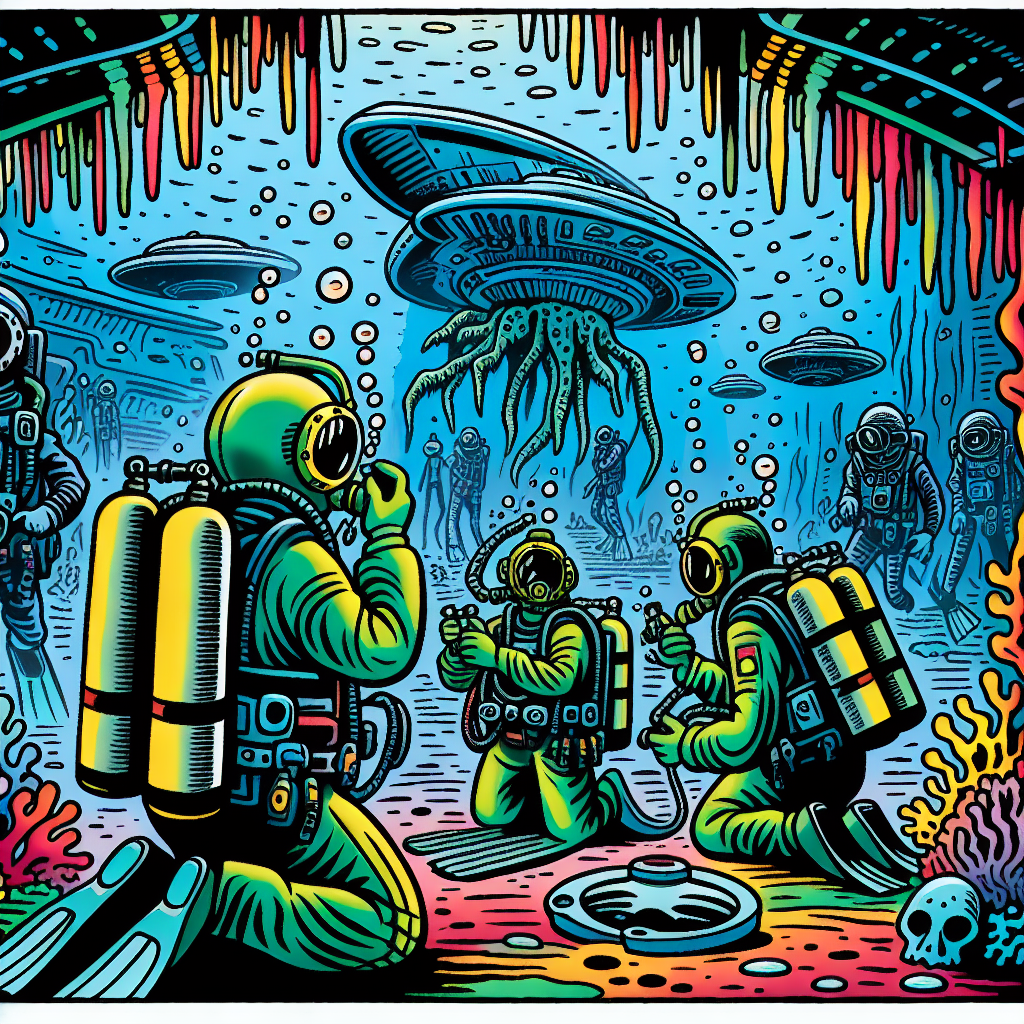
The concept of underwater alien bases, often connected with Unidentified Submersible Objects (USOs), has fascinated researchers and the general public alike. While UFOs in the sky have sparked global intrigue, the possibility of alien operations beneath our oceans adds another layer to the mystery. Several reports and studies explore the tantalizing possibility that extraterrestrial beings might have established bases within the unexplored depths of Earth's oceans.
What are Unidentified Submersible Objects?
USOs are aquatic equivalents of UFOs, often described as mysterious objects that submerge underwater or perform unexplainable maneuvers at sea. These phenomena have been documented for centuries and have recently gained attention due to advancements in naval and underwater technology. Unlike traditional UFOs, USOs interact with water, leaving researchers puzzled by their speed, agility, and apparent disregard for the known laws of physics.
<
Historical Accounts of USO Encounters
One of the earliest documented USO incidents occurred in October 1492, when Christopher Columbus and his crew reported seeing strange lights darting across the night sky and plunging into the sea near the Bermuda Triangle. Although their explanations at the time relied heavily on religious beliefs, modern researchers speculate these might have been early USO encounters.
In more recent times, the Cold War era presented numerous USO sightings, particularly by military personnel. During the 1960s and 1970s, several Soviet naval reports described encounters with fast-moving underwater objects significantly surpassing the capabilities of any known submarines. According to naval officer Yury Beketov, whose experiences were detailed in declassified documents from the Russian Navy, these encounters involved USOs traveling at speeds over 230 knots, a velocity unimaginable for any human-made vessel at that time.
Modern-day Reports and Theories
In 2019, the US Navy officially admitted to encountering unidentified aerial phenomena, providing tacit acknowledgment that the mysteries extend into the ocean's depths. One of the most compelling modern incidents involves the U.S. Navy's encounter with the so-called 'Tic Tac' UFO in 2004. David Fravor, a retired U.S. Navy fighter pilot, described an object that demonstrated erratic movement and rapidly descended from 60,000 feet to below sea level in seconds, suggesting possible USO capabilities.
<
Potential Locations of Underwater Alien Bases
The potential hiding spots for underwater alien bases are as mysterious as the phenomenon itself. The Mariana Trench, famously known as the deepest part of the world's oceans, is considered a potential location due to its inaccessibility and unexplored nature. Similarly, areas such as the Bermuda Triangle and the Loch Ness in Scotland have been cited frequently in historical and contemporary reports of strange underwater activity.
In 1968, the report from the USS Scorpion, a nuclear submarine that vanished in the North Atlantic Ocean, hinted at unusual sonar contacts prior to its disappearance. Some theorists speculate that such incidences might be linked to secret alien operations off the coast of Bermuda.
The Scientific Perspective
While the idea of underwater alien bases is thrilling, the scientific community remains skeptical, citing the lack of concrete evidence. However, with over 80% of the ocean still unexplored, some scientists acknowledge that the potential for undiscovered phenomena exists. Researchers from institutions like the National Oceanic and Atmospheric Administration (NOAA) suggest that if alien life exists beneath the seas, its detection would require technology capable of penetrating vast and complex underwater environments.
Airin Jacobsen, an oceanographer with NOAA, notes, "The challenges of exploring the ocean floor are manifold. Current technology limits our ability to thoroughly investigate these claims, but continued interest and funding could change that in the future."
The Public's Role in Unraveling the Mystery
Public interest and independent research groups have played a significant role in keeping the discourse on USOs and potential underwater bases alive. Conferences like those held by the Mutual UFO Network (MUFON) and grassroots initiatives have propelled marine exploration narratives into the mainstream. The acknowledgment by governmental bodies, such as the Pentagon's formation of the Unidentified Aerial Phenomena Task Force (UAPTF), further emphasizes the legitimacy and importance of investigating these reports.
Ultimately, while there is much speculation about the existence of underwater alien bases, the pursuit of answers continues to inspire and captivate. If evidence of extraterrestrial operations deep within our oceans were to emerge, it could reshape humanity's understanding of our universe and our place within it.