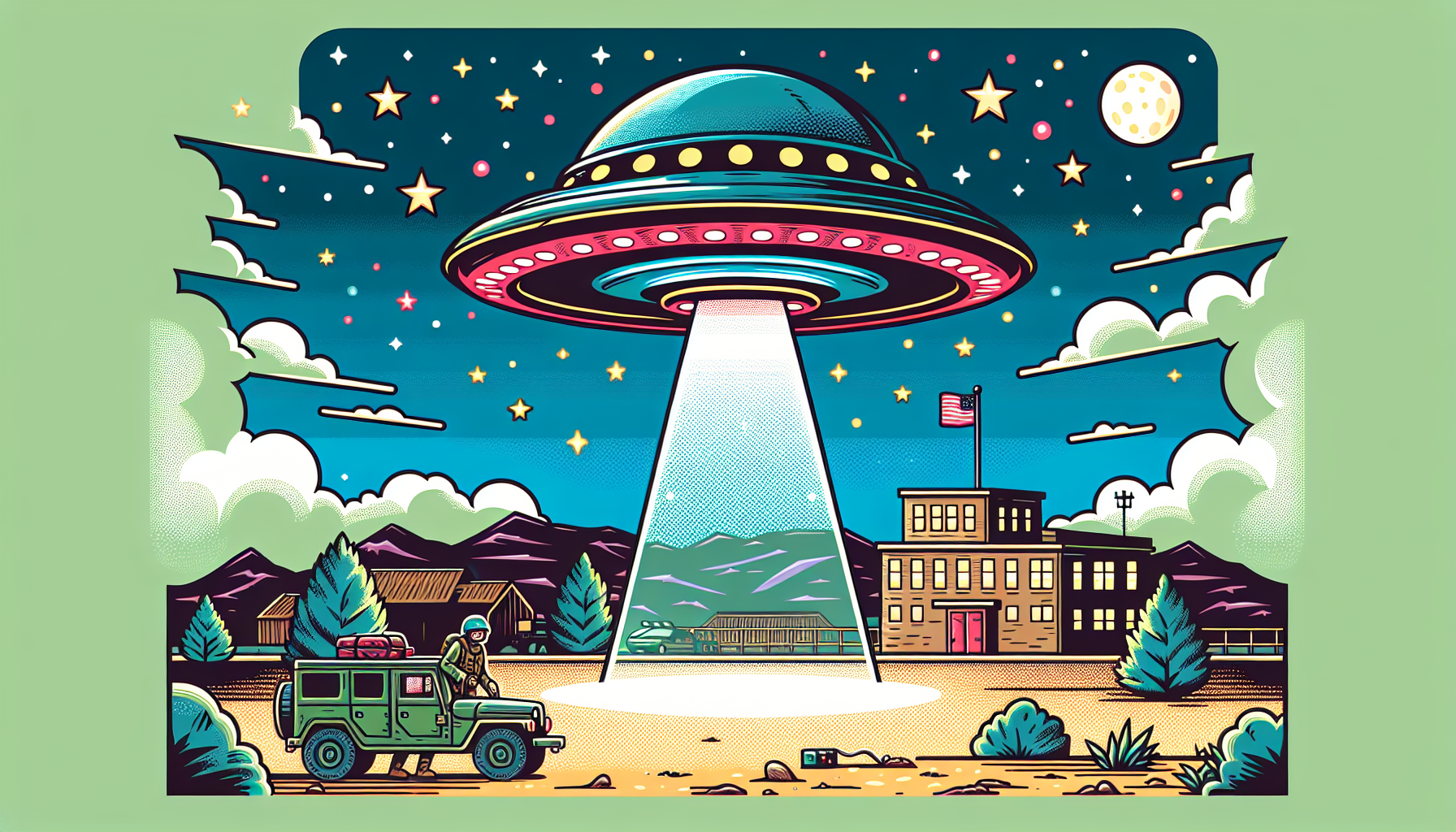
Unveiling Canada's UFO Archives
In recent years, nations worldwide have exhibited a growing interest in the phenomenon of unidentified flying objects (UFOs), leading to significant declassification of governmental archives. Among these, Canada's rich trove of UFO files offers a fascinating glimpse into decades of investigations and sighting reports. From the Cold War era to present day, these documents unveil a persistent intrigue and official acknowledgment of strange phenomena across Canadian skies.
The Canadian UFO archives were first made available to the public in 2009 through an ongoing effort to promote transparency in government-held information. The National Research Council (NRC) of Canada and the Department of National Defence (DND) were instrumental in cataloging and preserving this trove of documents, which spans from the late 1940s to the early 1980s. This declassification was aligned with similar initiatives instigated by other countries, notably the United States and the United Kingdom.
Early Encounters: The 1947 Wilbert Smith Memo
One of the pivotal figures in Canada's UFO investigations was Wilbert Smith, a senior radio engineer with the Department of Transport. In a memorandum dated November 21, 1950, Smith asserted that discussions with American scientists indicated that UFOs were considered "the most highly classified subject" in the United States. Furthermore, he noted that their existence was taken seriously, hinting at efforts to understand their propulsion methods.
The Smith memo underscored Canada's seriousness in pursuing a scientific inquiry into UFOs, leading to the formation of Project Magnet in December 1950. This project was established to investigate magnetic phenomena as potential explanations for UFO sightings and studied microwave and radio frequencies for evidence of extraterrestrial technology.
Project Magnet and Beyond
Stationed at Shirley’s Bay near Ottawa, the Project Magnet site became a focal point for UFO research under Smith’s direction. Reports indicate that sightings continued to pour in, with one notable incident on August 8, 1954, where Smith reportedly observed an unknown object through his scientific equipment. Despite its closure in 1954 due to lack of conclusive results, Project Magnet set a precedent for continued investigations by Canadian officials.
Simultaneously, Canada initiated Project Second Storey, a smaller, more confidential study of UFOs. Established in 1952, it fielded numerous reports from aviation professionals, military personnel, and the public. Over the years, these reports were meticulously cataloged, contributing to Canada’s extensive UFO archives.
Declassified Files: Reports and Revelations
In the archives, numerous documented encounters provide intriguing narratives. For instance, on March 4, 1967, at Falcon Lake in Manitoba, prospector Stefan Michalak reported a close encounter that left him with physical burns resembling a grid pattern. This incident gained notoriety and was complemented by contemporaneous reports from the Royal Canadian Mounted Police and medical professionals.
More reports document mass sightings, such as the 1995 mass sighting over Quebec, where multiple witnesses reported a circular object with alternating lights. This case, among others, fueled public fascination and media coverage, linking sightings with environmental concerns and advancing aerospace technology.
Current Developments and Relevance
To this day, Canada's declassified UFO archives remain a subject of scholarly and public interest, serving as an important resource for researchers and enthusiasts alike. More recently, in June 2021, Canada saw renewed interest and cooperation in light of the Pentagon's release of a report highlighting multiple UAP (Unidentified Aerial Phenomena) incidents. As global attention intensifies, Canada's archives continue to provide a foundation for discussions about the presence and implications of unexplained aerial phenomena.
The ongoing efforts to examine and understand these files contribute significantly to global conversations about UFOs and their potential impact on national security, technology, and our understanding of the universe. These archives not only chronicle past government efforts but also underscore the continued importance of transparency and curiosity in unraveling the mysteries that occasionally traverse our skies.