
The Beginning of the Wave: A Night to Remember
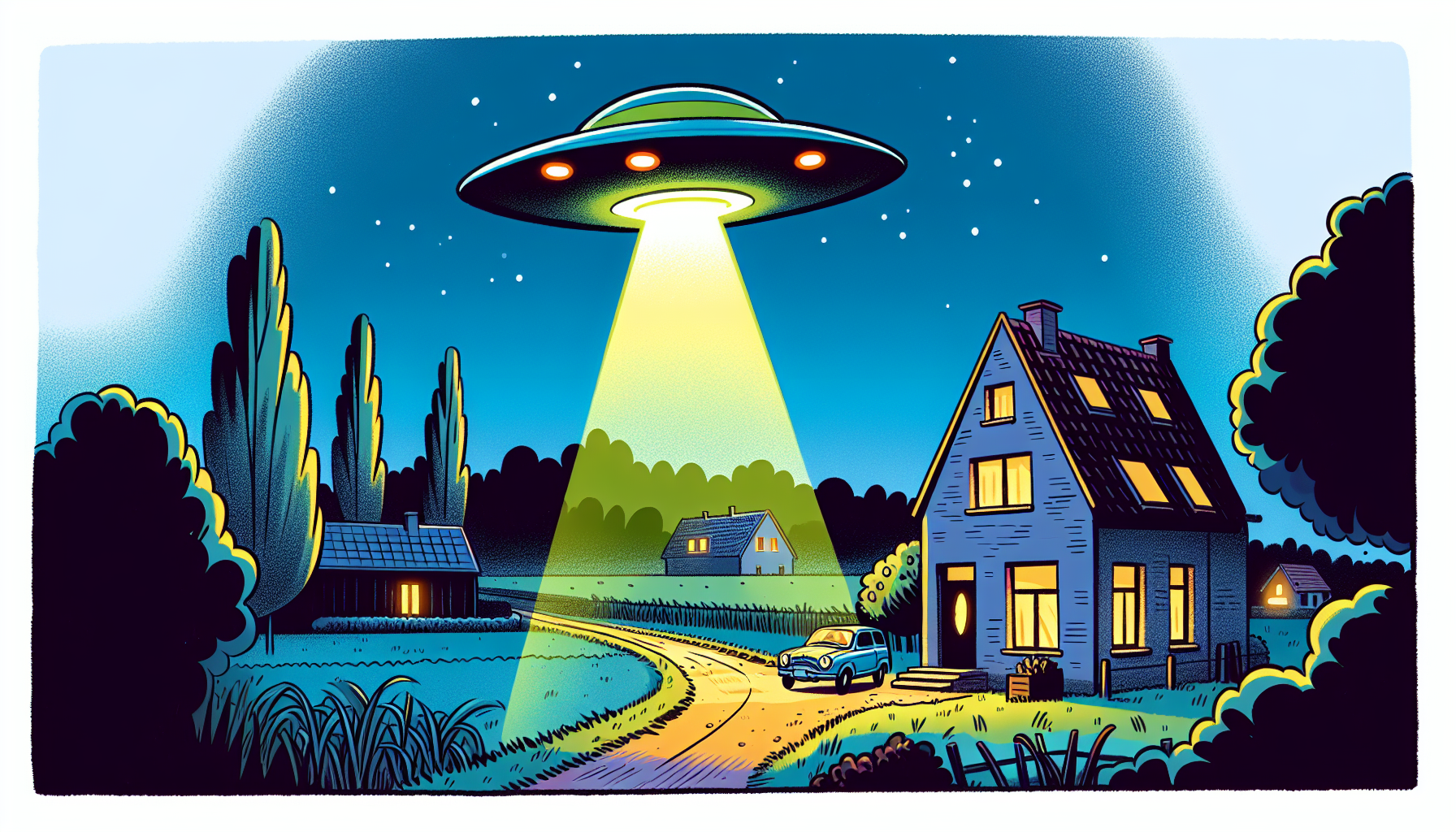
The Belgian UFO wave began on the night of November 29, 1989, when numerous residents in Eupen, a small town near the German border, observed an unusual sight. Several local police officers, including notable accounts from officers Heinrich Nicoll and Hubert von Montiguy, reported seeing a large, low-flying triangular object with three bright lights and a red flashing light in the center.
This initial sighting sparked a series of reports across Belgium. Within hours, phone lines for emergency services buzzed with calls from citizens claiming to witness similar triangular craft silently traversing the skies. The magnitude of the sightings was unlike anything seen before in the region, with thousands of people involved.
Belgian physicist Auguste Meessen from the Catholic University of Leuven noted the reliability of the witnesses and the consistency of the detailed descriptions. "The maturity of the witnesses, who include policemen and even engineers, suggests this phenomenon cannot be easily dismissed," he stated.
Escalation and National Attention
As the events unfolded, the Belgian Society for the Study of Space Phenomena received over 700 separate reports from individuals across Belgium. Reports included not only visual sightings but also consistent accounts of an object that defied conventional aerodynamics.
On March 30-31, 1990, the phenomenon reached its peak when a formation of unusual aerial objects appeared again, prompting the Belgian Air Force to launch F-16 fighters to intercept the mysterious crafts. The jets picked up objects on radar that appeared to change speed and altitude inexplicably, even as they were unable to visually confirm them.
Colonel Wilfried De Brouwer, the then-Chief of Operations in the Belgian Air Force, later stated that the objects demonstrated technological capabilities unknown to modern aviation, challenging the boundaries of existing technology at the time.
Media Frenzy and Public Reaction
The sightings spurred intense media coverage both in Belgium and internationally. News outlets dedicated significant airtime and print space to the accounts, interviewing witnesses and experts alike. Given the wave's scale, governments of other European countries were also alerted as similar reports began trickling in.
In an unprecedented move, the Belgian Air Force took a transparent approach by working with the Society for the Study of Space Phenomena, publishing data from radar and field investigations in the interest of clarity and scientific inquiry.
Scientific Investigations and Explanations
Efforts to scientifically validate the sightings involved collaboration with international UFO researchers. Various hypotheses were proposed ranging from secret military aircraft tests and atmospheric phenomena to outright fabrication. However, significant evidence to categorically explain the events remained elusive.

Police sketches and photographs taken during this period were thoroughly analyzed but remained inconclusive due to their varied quality. A notable photograph taken by a young Belgian, known as the "Petit Rechain photograph," showing a triangular UFO over Liege, was later revealed to be a hoax.
The Aftermath: Lingering Questions
The Belgian UFO Wave left an indelible mark on the collective psyche and remains a topic of active debate. It stands out as an example of mass eyewitness phenomena where numerous credible witnesses observed something extraordinary, yet stayed just beyond the firm grasp of definitive proof.
In retrospective interviews, Major General Wilfried De Brouwer expressed regret that no conclusive evidence was ever obtained but remained open to the possibility that these were genuinely unexplained aerial phenomena. "What is sure is that there was a presence of something unusual in our airspace," he remarked.
Legacy and Influence on UFO Research
In the ensuing decades, the Belgian UFO Wave has continued to fuel interest in unidentified phenomena both within scientific circles and among the general public. It has led to increased cooperation in the field of phenomenology across borders and inspired further investigations into aerial phenomena.
The events have been a subject of many documentaries and analyses, enhancing our understanding of how human perceptions can be swayed by both tangible evidence and psychological interpretations.