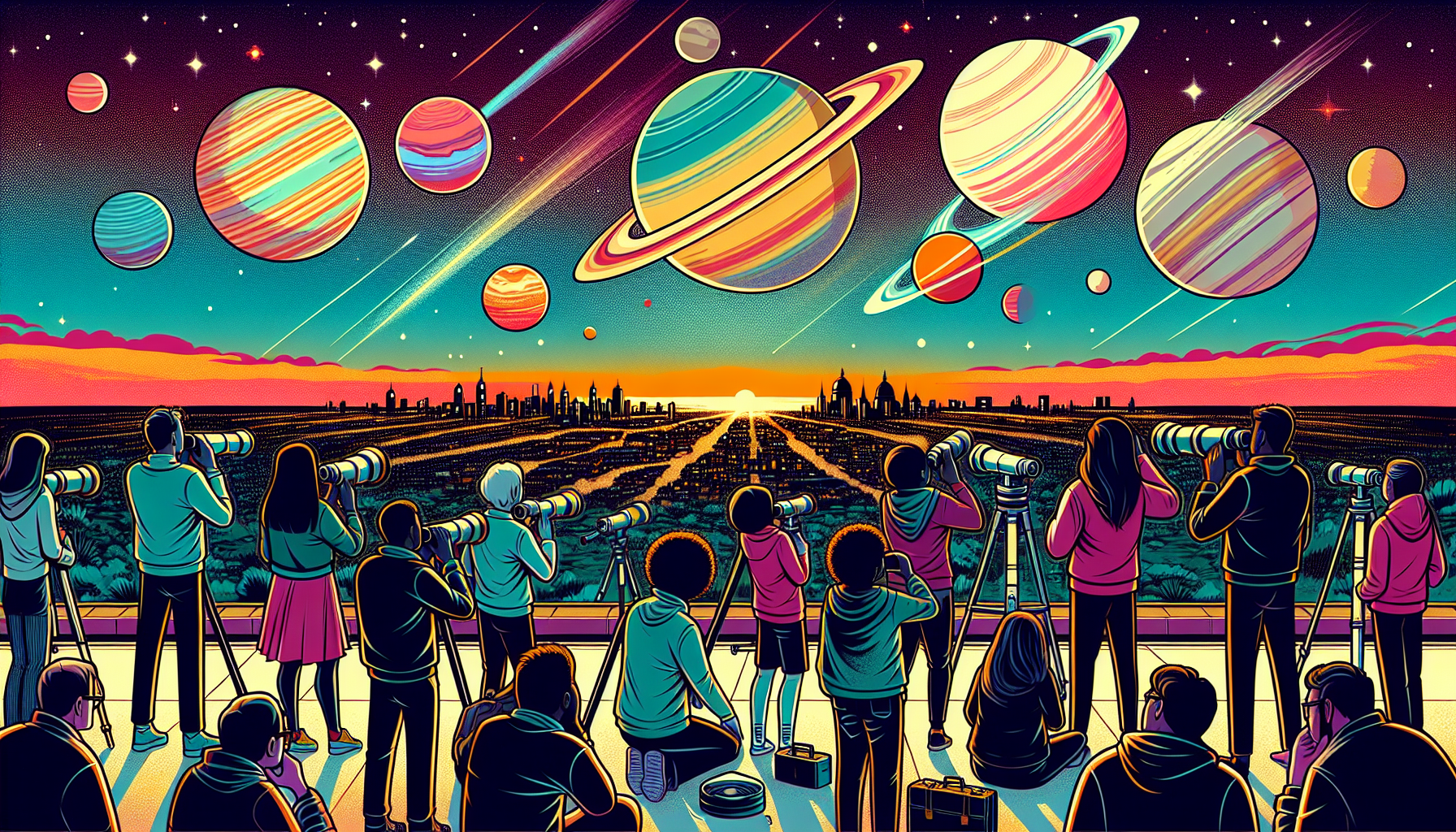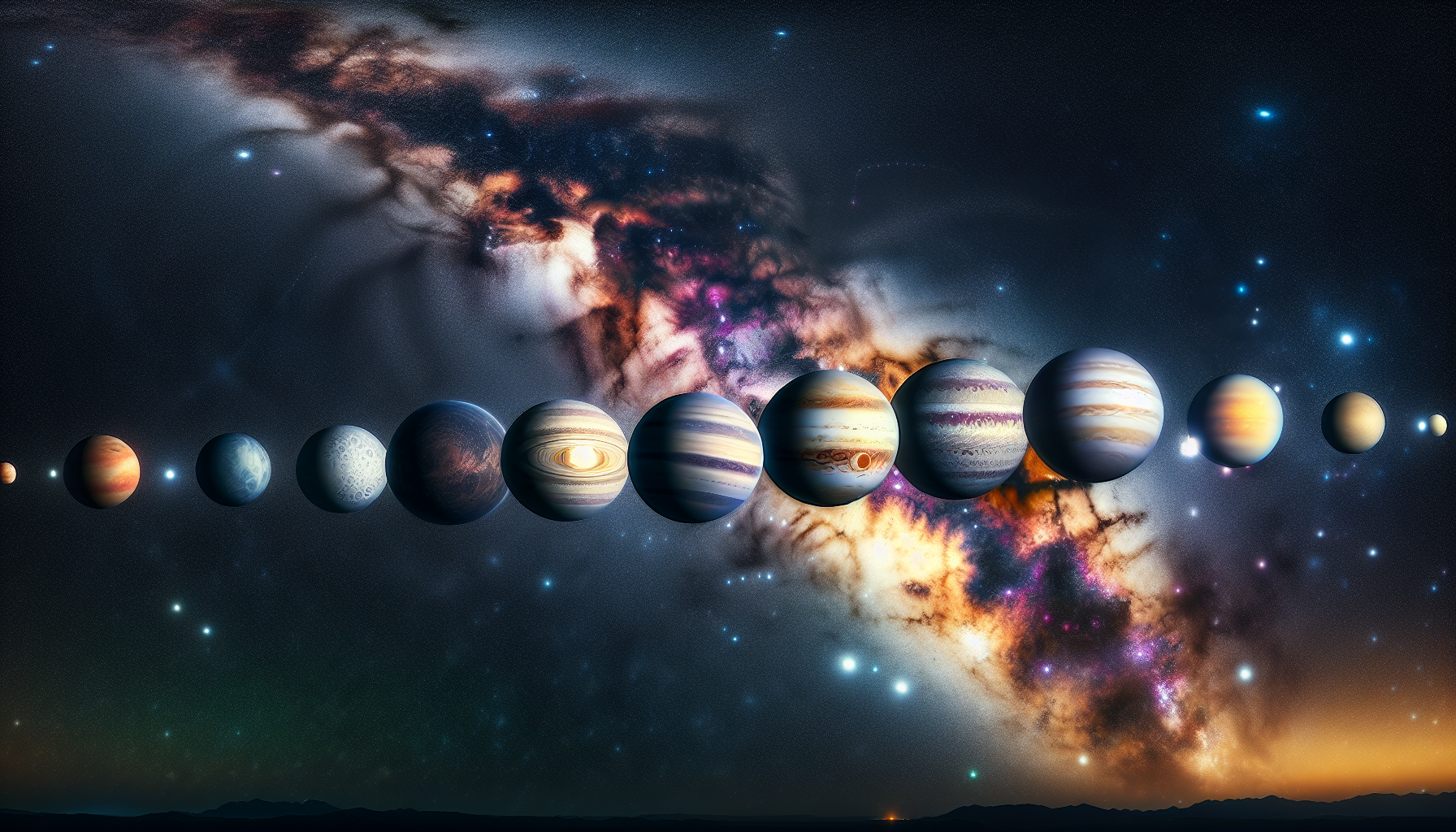
I’m thrilled to share with you a rare and amazing event in our evening sky. Six Planets Aligned, creating a celestial parade. This alignment includes Venus, Saturn, Jupiter, Mars, Uranus, and Neptune. It’s a sight to see and can be spotted from many places worldwide.
The alignment of these planets is a rare event. The inner planets align every 39.6 years. This makes it a special chance for stargazers and astronomy fans to see six planets together.
This event started on January 21, 2025, It’s not just for astronomy lovers. It also offers a chance for education and the environment. It can help with dark sky initiatives and improve STEM education in schools.
As I explore this planetary alignment, I’ll give you all the details. You’ll learn the best places to see it and how to observe this rare event. It’s truly a unique celestial alignment.
Understanding Social Media’s Role in Astronomy News
Social media is a big deal for sharing news about space events. But, we must be careful of misinformation. By checking facts before we share, we make sure social media stays a good place for space fans and everyone else. It helps us get accurate info about cool events like the rare planetary alignment.
Six Planets Aligned: The Real Current Phenomenon
Right now, six planets are lined up in the sky. These are Mars, Jupiter, Uranus, Neptune, Venus, and Saturn. You can see this alignment from many places around the world. The best time to watch is just after the sun goes down.
From the Northern Hemisphere, the best time is around 8:30 p.m. after sunset. Venus, Saturn, and Neptune will disappear by 11:30 p.m. to midnight. But Mars, Jupiter, and Uranus will stay up a bit longer.
To see these planets clearly, get away from city lights. An 8-inch telescope with 50 times magnification works well for Uranus. For Neptune, you need 150 times magnification. And Saturn can be seen with just 25 times magnification.
You don’t need to be in a specific place to see these planets. They can be spotted in many US states and countries. The best time to see them is between January 21 and February 21. The week of January 29 is the best for viewing.
| Planet | Viewing Time | Magnification Required |
|---|---|---|
| Mars | 8:30 p.m. – sunrise | None |
| Jupiter | 8:30 p.m. – sunrise | None |
| Uranus | 8:30 p.m. – sunrise | 50x |
| Neptune | 8:30 p.m. – 11:30 p.m. | 150x |
| Venus | 8:30 p.m. – 11:30 p.m. | None |
| Saturn | 8:30 p.m. – 11:30 p.m. | 25x |
Understanding Planetary Alignments in Simple Terms
When we see six planets align in the sky, it’s a rare sight. This event is special because it shows all these planets in one spot. From Earth, it looks different because of their orbits and how far they are from the Sun.
The planets’ orbits and how far they are from the Sun affect how often we see them line up. For example, Mars, Jupiter, Venus, and Saturn are easy to see with the naked eye. But Uranus and Neptune need binoculars or a telescope because they are farther away.
It’s important to understand planetary alignments to enjoy their beauty. Knowing what makes them special helps us appreciate the night sky. Whether it’s a rare alignment or a common sight, the sky has wonders waiting for us.
What Makes a True Planetary Alignment
A true alignment happens when planets are in the same sky area. This is rare because of their different paths and distances from the Sun. Seeing many planets together is a rare and beautiful event.
Why Alignments Appear Different from Earth
How we see planetary alignments changes based on where we are and when we look. The planets’ paths, the Sun’s position, and Earth’s movement all affect what we see in the sky.
| Planet | Magnitude | Visibility |
|---|---|---|
| Mars | -1.3 | Naked eye |
| Jupiter | -2.6 | Naked eye |
| Venus | -4.7 | Naked eye |
| Saturn | 0.6 | Naked eye |
| Uranus | 5.7 | Binoculars |
| Neptune | 7.9 | Telescope |
The Current Night Sky Configuration
As we watch the skies in January 2025, a special event is happening. The night sky shows six planets aligned. These are Mars, Jupiter, Uranus, Neptune, Venus, and Saturn. This rare sight lets us see many planets together in the sky.
The best time to see this is right after sunset. Watch the skies for Mars, Jupiter, and Venus. You can see them with your eyes. But, you’ll need binoculars or a telescope for Uranus and Neptune.
The following table provides information about the planets involved in the alignment:
| Planet | Visibility | Best Viewing Time |
|---|---|---|
| Mars | Naked eye | After sunset |
| Jupiter | Naked eye | After sunset |
| Venus | Naked eye | After sunset |
| Uranus | Binoculars or telescope | After sunset |
| Neptune | Binoculars or telescope | After sunset |
| Saturn | Naked eye | After sunset |
Visible Planets in January’s Evening Sky
As the sun sets in January, the evening sky lights up with planets. You can see mars, jupiter, venus, and saturn from many places. The best time to look is right after sunset.
Venus and saturn shine in the southwest. Jupiter is high in the southeast, and mars is in the east. Venus is very bright, much brighter than saturn.
Start looking for the planets about 45 minutes after sunset. This is when they are best seen in the sky. With mars close to Earth on January 12, 2025, and venus farthest from the sun on January 9-10, 2025, it’s a great time to see them.
Here’s a summary of the visible planets and their positions:
| Planet | Position |
|---|---|
| Venus | Southwest |
| Mars | East |
| Jupiter | High in the Southeast |
| Saturn | Southwest |
Knowing where and when to look for these planets lets you enjoy this rare event. It’s a chance to see the beauty of the night sky.
Best Times and Locations for Planet Viewing
To see the rare planetary alignment, you need to watch the skies at the right time and place. The best time is shortly after sunset, when the sky is dark. This is when you can see planets like Venus, Mars, Jupiter, and Saturn clearly.
Finding a spot with little light pollution is key. Places like hilltops or areas away from city lights are perfect. A dark location lets you see more details in the sky.

Here’s a table with the best times and places to see the planets:
| Planet | Best Viewing Time | Location |
|---|---|---|
| Venus | Shortly after sunset | Western horizon |
| Mars | Eastern horizon, around 9 pm | Eastern sky |
| Jupiter | Southern sky, around 10 pm | Southern horizon |
| Saturn | Southern sky, around 11 pm | Southern horizon |
By following these tips and choosing a dark spot, you can enjoy the rare planetary alignment. And watch the skies in awe.
Equipment Needed for Planet Observation
To fully appreciate a planetary alignment, like the celestial parade of mars, jupiter, and other planets, you need the right gear. As an amateur astronomer, I know that the right equipment makes a big difference. It can greatly improve your observation experience.
A telescope is often the best tool for observing planets. It offers high resolution and contrast, letting you see details on planets like mars and jupiter. But, not all telescopes are good for this. Some are better than others.
Naked Eye vs. Telescope Viewing
Some planets can be seen with the naked eye, but a telescope shows more. With a telescope, you can see Saturn’s rings or Jupiter’s moons. These are not visible to the naked eye.
When picking a telescope, think about the aperture and focal length. A bigger aperture means more detail. A longer focal length helps with contrast and reduces false color. Refractors are great for planets because they have high contrast and no central obstruction.
Recommended Tools for Amateur Astronomers
There are more tools to enhance your experience. Star charts help find planets and other objects. Spectroscopy equipment gives detailed info on a planet’s composition and temperature.
| Telescope Type | Aperture | Focal Length | Central Obstruction |
|---|---|---|---|
| Refractor | 80-120mm | 600-1000mm | None |
| Reflector | 150-250mm | 800-1500mm | 20-30% |
| Schmidt-Cassegrain | 200-300mm | 1000-2000mm | 30-40% |
Choosing the right equipment and using it with other tools and techniques unlocks the full potential of planetary observation. This way, you can enjoy a truly immersive experience during a celestial parade or planetary alignment.
Historical Significant Planetary Alignments
Looking at the current rare planetary alignment, we see the importance of past ones. These celestial parades are rare and awe-inspiring. Some are more significant because of their cultural and astronomical importance.
In the 17th century, a unique planetary alignment sparked debate. It was rare and culturally significant. Many saw it as a sign of great change.
Today, we value these alignments, like the current rare planetary alignment. It features six planets, a rare sight. The next similar alignment won’t happen for years. This celestial parade shows our solar system’s beauty and complexity.

Studying past alignments helps us understand rare planetary alignments. We learn about the planets’ orbits and positions. This knowledge helps predict future alignments, letting us appreciate and learn from them.
| Planet | Orbital Period | Alignment Significance |
|---|---|---|
| Mercury | 88 days | Inner planet alignment |
| Venus | 225 days | Brightest planet in the alignment |
| Mars | 687 days | Red planet’s position in the alignment |
| Jupiter | 12 years | Largest planet in the alignment |
| Saturn | 29.5 years | Ring system’s visibility during alignment |
Exploring rare planetary alignments shows our solar system’s beauty and complexity. Each planet has a unique role in the celestial parade of the cosmos.
Photography Tips for Capturing the Alignment
To capture the beauty of a planetary alignment, like the one with mars and jupiter, you need the right techniques. When you watch the skies, you get a chance to take a photo of these planets lined up. Use a wide-angle lens and a low ISO for night sky photography. This lets you show the vast sky and the planets’ positions.
Knowing what affects night sky photography quality is key. The Moon’s phase can change the sky’s brightness, making it harder to get a clear photo. Use a tripod and a remote shutter to reduce camera shake and get a sharper image. For mobile phone photos, a tripod adapter and a remote shutter app can help too.

Camera Settings for Night Sky Photography
For night sky photos, a low ISO and a wide-angle lens are crucial. Try different exposure times to get the planets’ details right without overexposing. For mars and jupiter, a shorter exposure time helps avoid blurring.
Mobile Phone Photography Techniques
Mobile phone photography is getting more popular. With the right techniques, you can take amazing photos of the planetary alignment. Use a tripod adapter and a remote shutter app to reduce camera shake. Experiment with exposure times to find the best balance. Follow these tips to capture the beauty of mars and jupiter’s alignment.
Common Misconceptions About Planetary Alignments
As we get closer to the rare planetary alignment, it’s key to clear up some common myths. Many think planetary alignments are super rare, but they actually happen a few times a year. The big deal is when all seven planets line up, which is a rare sight. Venus and Saturn will shine bright in the sky in January 2025, adding to the show.
Another myth is that planets always line up in a straight line. But, because of their different orbits and distances from the Sun, this is impossible. For instance, Mercury orbits the Sun in 88 Earth days, while Neptune takes about 60,190 Earth days. This makes a straight-line alignment very unlikely.
Lastly, the rarity of planetary alignments is often overstated. Claims of a “once in 396 billion years” event are not true. The universe is only about 13.7 billion years old, making such events highly unlikely. As we look forward to the alignment, it’s important to know the truth and enjoy the beauty of Venus, Saturn, and other planets.
The table below shows the orbital periods of the planets involved in the alignment. It highlights the complexity of their orbits and why a complete alignment is so rare.
| Planet | Orbital Period (Earth days) |
|---|---|
| Mercury | 88 |
| Venus | 225 |
| Earth | 365 |
| Mars | 687 |
| Jupiter | 4,333 |
| Saturn | 10,759 |
| Uranus | 30,687 |
| Neptune | 60,190 |
Conclusion: Embracing Real Celestial Wonders
The alignment of six planets in the sky is truly awe-inspiring. It shows us the beauty of our solar system. This rare event is a chance to see the grandeur of the universe.
While the celestial parade dazzles us, it’s important to know what’s real. We should approach these events with wonder and curiosity. This way, we can truly appreciate the beauty of the night sky.
Understanding these alignments helps us see the universe in a new light. Whether we watch with our eyes or a telescope, these events remind us of our place. They show us the beauty of the planets moving together.
As we keep exploring the night sky, let’s focus on the real wonders. Let’s find comfort in the timeless beauty of the heavens above.
Source Links
- https://www.scimag.news/news-en/65753/a-rare-celestial-show-you-cant-miss-six-planets-align-in-2025/ – A Rare Celestial Show You Can’t Miss! Six Planets Align in 2025! – Science Magazine
- https://www.standardmedia.co.ke/national/article/2001510353/rare-cosmic-spectacle-to-be-witnessed-as-six-planets-align – Rare cosmic spectacle to be witnessed as six planets align
- https://m.economictimes.com/news/international/us/is-planetary-parade-visible-tonight-as-part-of-a-rare-event-that-wont-repeat-for-400-years/articleshow/117562840.cms – Is Planetary Parade visible tonight as part of a rare event that won’t repeat for 400 years?
- https://opentools.ai/news/celestial-spectacle-six-planet-alignment-illuminates-january-night-sky-2025 – Celestial Spectacle: Six-Planet Alignment Illuminates January Night Sky 2025
- https://gulfnews.com/uae/science/dubai-astronomy-group-busts-planetary-alignment-myths-1.500020449 – Dubai Astronomy Group busts planetary alignment myths
- https://www.cnet.com/science/how-to-see-january-21-planet-parade-six-planets-in-alignment/ – Here’s How You Can Marvel at Six Planets in a Spectacular Planet Parade This Weekend
- https://www.today.com/life/astrology/parade-of-planets-january-2025-meaning-rcna188519 – Six planets will be visible in the night sky this month. How to see the ‘parade of planets’
- https://starwalk.space/en/news/what-is-planet-parade – Planetary Alignment in January 2025: How to See It
- https://www.skyatnightmagazine.com/news/planetary-alignment-2025 – Six planets are visible in the sky all at once this month. How to see the planetary alignment
- https://earthsky.org/tonight/planetary-alignment-january-25-2025/ – A planetary alignment on January 25, 2025?
- https://www.independent.co.uk/space/planets-align-date-planetary-parade-how-see-b2685131.html – ‘Planetary parade’ visible tonight in rare event that won’t repeat for 400 years
- https://www.fox13now.com/news/local-news/northern-utah/6-planets-are-aligned-in-the-night-sky-right-now-heres-why – 6 planets are aligned in the night sky right now. Here’s why
- https://earthsky.org/astronomy-essentials/visible-planets-tonight-mars-jupiter-venus-saturn-mercury/ – Visible planets and night sky guide for January
- https://www.businessinsider.com/six-planets-align-how-to-see-january-february-2025-1 – How to see 6 planets align in a rare night-sky parade in January and February
- https://www.nbcchicago.com/news/local/these-6-planets-will-align-in-the-night-sky-this-month-heres-how-to-see-the-planetary-parade/3653385/ – Don’t miss it: These 6 planets will align in the night sky this month. Here’s how to see the ‘parade of planets’
- http://scopeviews.co.uk/PlanetScopes.htm – Telescopes for Planets
- https://www.stellarnet.us/stellarnet-spectroscopy-and-the-large-planetary-alignment/ – StellarNet Spectroscopy and the Large Planetary Alignment – StellarNet, Inc.
- https://www.smithsonianmag.com/smart-news/how-to-see-six-planets-lined-up-in-the-night-sky-this-month-and-glimpse-a-rare-seven-planet-parade-in-february-180985893/ – How to See Six Planets Lined Up in the Night Sky This Month—and Glimpse a Rare Seven-Planet ‘Parade’ in February
- https://www.indiatoday.in/world/shows/story/the-buzz-planet-parade-2025-how-the-six-planetary-alignments-impact-your-zodiac-signs-glbs-2668627-2025-01-22 – Planet Parade 2025: How the six planetary alignments impact your zodiac signs
- https://www.thelondonastronomer.com/it-is-rocket-science/2018/6/7/a-quick-guide-to-planetary-imaging – A Guide to Planetary Imaging & Processing — The London ASTRONOMER
- https://www.highpointscientific.com/astronomy-hub/post/how-tos/how-to-photograph-planets – Beginners Guide to Imaging the Planets | High Point Scientific
- https://www.skyatnightmagazine.com/astrophotography/astrophoto-tips/how-to-photograph-planets – How to photograph the planets
- https://www.discovermagazine.com/the-sciences/seven-planets-will-soon-align-creating-a-planet-parade-in-the-sky – Seven Planets Will Soon Align, Creating a Planet Parade in the Sky
- https://www.astronomy.com/science/what-it-means-when-planets-align/ – What it means for planets to align | Astronomy.com
- https://interestingengineering.com/culture/planetary-alignment-january-2025-viewing-guide – January’s planetary alignment: Myths debunked and viewing tips
- https://www.linkedin.com/posts/ruth-olegnowicz-97386610_are-the-planets-aligning-more-often-than-activity-7283564311883440129-N6OI – Ruth Olegnowicz on LinkedIn: Are the Planets Aligning? More often than you think! On January 21st…